Floral Set: Sketches of Flowers, Plants
A Designer’s First Glance—What This Set *Feels* Like Before the Needle Moves
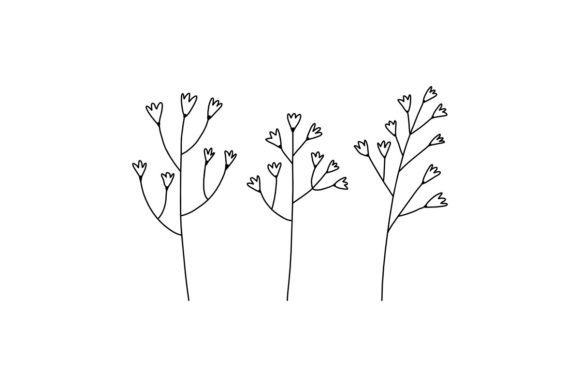
Opening Floral Set. Sketches of Flowers, Plants feels like flipping through a quiet, sunlit botanical sketchbook—loose but intentional, detailed but uncluttered. These aren’t stiff clipart florals or over-rendered bouquets. They’re expressive line-based sketches: soft stems, asymmetrical petals, subtle leaf veins, and gentle negative space. The mood is calm, artisanal, and quietly confident—not fussy, not minimalist, but *handmade in spirit*, even though they’re digital. That matters deeply when you’re choosing a machine embroidery design for real-world use, especially if your customers are buying a personalized gift or boutique product because they value authenticity over polish.
Real Project Test: Embroidering a Linen Tote Bag for a Local Gift Shop
Last week, I prepped Floral Set. Sketches of Flowers, Plants for a custom linen tote bag order—three medium-sized floral motifs placed diagonally across the front panel. The goal? A refined yet approachable look for a small-town gift shop’s spring collection. What stood out immediately was how well the sketch-style lines translated into satin stitch and running stitch outlines. Because the vectors are clean and shapes are well organized, converting to embroidery file formats (even without native .dst or .pes) was straightforward using my digitizing software. No jagged edges, no collapsed paths—just smooth curves that held integrity at 3–4 inches wide.
Where It Shines—and Where You’ll Want to Pause
Floral Set. Sketches of Flowers, Plants excels on stable, medium-weight fabrics: cotton twill aprons, canvas tote bags, structured pillow covers, and midweight sweatshirts. On those surfaces, the sketch aesthetic reads as intentional artistry—not a shortcut. Customers notice the rhythm of the stems, the variation in petal weight, the way light and shadow suggest depth without heavy fill stitch.
But here’s where practical judgment kicks in:
- Small hoop sizes (under 4”): Some motifs include fine interior lines or delicate tendrils. Test one motif alone before grouping—what looks graceful at 5” may blur or skip at 2.5”.
- Stretchy or thin fabric: These designs rely on clarity of line. On lightweight jersey or baby knits, stabilizer choice is non-negotiable—use cutaway + tear-away combo, not just basic tear-away.
- Dark fabric backgrounds: The sketch style depends on contrast. On navy or charcoal, avoid pale thread colors unless you’re aiming for subtlety. Black or deep moss green thread gave me the cleanest read on dark tea towels.
- Curved surfaces (caps, curved pillow seams): Avoid placing intricate corners or tightly clustered blossoms near seams or crowns—they’ll distort. Stick to central, flatter zones.
How It Elevates (or Undermines) Your Finished Product
This isn’t just about “will it stitch?” It’s about whether the finished piece earns trust. When I stitched Floral Set. Sketches of Flowers, Plants onto a set of organic cotton baby onesies, the reaction wasn’t “cute”—it was “that looks like something an illustrator drew just for this little one.” That perception lifts perceived value, supports premium pricing, and reinforces brand consistency for craft businesses and Etsy sellers who position themselves as thoughtful makers—not mass producers.
Conversely, forcing it onto a dense, busy background (like a heavily embroidered holiday sweater) dilutes its charm. Its strength is breathing room—so pair it with solid-color garments, simple patches, or minimal kitchen towels where the sketch can be the quiet hero.
Practical Notes Every Embroidery Designer Should Run Through
Before cutting thread or listing a new product, I always do this quick checklist with any new digital embroidery file—even one as promising as Floral Set. Sketches of Flowers, Plants:
- Test on scrap fabric matching your final project’s weight and stretch.
- Check thread color contrast in both natural and artificial light—some muted greens shift dramatically under fluorescent bulbs.
- Review stitch density: sketch-style outlines often run lighter than full-fill florals, which is great for drape but means stabilizer support remains critical.
- Confirm hoop size compatibility—especially if layering multiple motifs from the set on one garment.
- Inspect small details at actual stitch-out size: does that tiny bud hold shape? Does the stem taper cleanly?
- Mock up in black and white first—this reveals balance and legibility faster than color.
- Compare performance on light vs. dark fabric backgrounds using printable mockups—it’s the fastest way to spot where detail gets lost.
- Verify licensing: since this is a Graphics download intended for Crafts, confirm whether commercial use (e.g., selling finished embroidered patches or digital product previews) is permitted before launching on Etsy or your small shop site.
Who’s This Really For? (And Who Might Want to Look Twice)
If you’re an Etsy seller building a cohesive spring collection—or a small shop owner curating nursery decor, wedding favors, or handmade kitchen goods—Floral Set. Sketches of Flowers, Plants fits like a well-worn apron: functional, flattering, and quietly distinctive. It works beautifully for personalized gifts (think monogrammed tea towels with a trailing vine), custom apparel with understated charm, and embroidered patches meant to feel collected, not mass-produced.
It’s less ideal for high-contrast streetwear, kids’ apparel needing bold simplification, or projects requiring ultra-fine detail at tiny scales (like 1”-wide cap fronts). And if your workflow leans heavily on automatic digitizing tools without manual cleanup, be prepared to refine stitch path order—vector clarity doesn’t equal auto-digitized readiness.
The Bottom Line: A Thoughtful Tool, Not a Magic Button
Floral Set. Sketches of Flowers, Plants won’t replace your design intuition—but it respects it. It gives you editable, high-resolution assets (PNG, EPS, JPG) that behave predictably across workflows, and vector precision that holds up whether you’re prepping for applique design, satin-stitched borders, or delicate running-stitch accents. As a designer who’s stitched hundreds of client projects, I value assets that let me focus on intention—not troubleshooting. This set does that. Just remember: even the best embroidery file is only as strong as the care behind its execution. Test. Observe. Adapt. Then stitch with confidence.